Understanding VPN Encryption for Personal Use
Learn how VPN encryption works to protect your online activity. We'll break down the technical concepts without the jargon, so you can make informed decisions about your digital privacy.
If you've ever worried about someone snooping on your internet activity, you're not alone. Whether you're checking email at a coffee shop, managing your bank account, or just browsing, the truth is — your data travels through multiple networks before reaching its destination. Without protection, it's vulnerable to interception. That's where VPN encryption comes in.
A VPN (Virtual Private Network) doesn't just hide your location — it encrypts your entire connection, turning your data into unreadable code. Even if someone intercepts it, they'll see nothing but scrambled information. But here's the thing: not all VPNs are created equal. The encryption method matters. The key length matters. And understanding the difference between AES-256 and other standards can help you choose the right tool for your needs.
What Happens Without VPN Protection
When you connect to the internet without a VPN, your Internet Service Provider (ISP) can see every website you visit. Public WiFi networks? Anyone on that network can potentially monitor your traffic. Coffee shop networks are particularly risky — they're convenient, but they're also notorious for packet sniffing attacks where someone captures unencrypted data passing through.
Your data includes everything: passwords, emails, search history, banking credentials. Attackers use tools called "packet sniffers" to capture this information in real-time. They don't need sophisticated hacking skills — just basic networking knowledge and readily available software. You're essentially broadcasting your personal information on an open channel.
Quick fact:
Over 60% of Czech professionals work remotely at least one day
per week. Without VPN protection, company data transmitted over
home networks is vulnerable to family members on the same WiFi
or neighbors with basic hacking tools.

How VPN Encryption Actually Works
VPN encryption works in layers. First, your data gets encrypted using a cipher — basically a mathematical formula that scrambles information into an unreadable format. The most common standard you'll encounter is AES (Advanced Encryption Standard). Think of it like putting your message in a locked box.
But here's the critical part: you need a key to unlock that box. That's where the second layer comes in. Your VPN creates an encryption key using a specific algorithm. AES-128 uses 128-bit keys, AES-192 uses 192-bit keys, and AES-256 uses 256-bit keys. The larger the key, the exponentially harder it becomes to crack through brute force. A 256-bit key has 2^256 possible combinations — that's over 115 quadrillion quadrillion possibilities.
1
Your data enters the VPN client
2
It's compressed to save bandwidth
3
Encryption cipher scrambles it
4
VPN server receives encrypted packet
5
Server decrypts and sends to destination
Educational Information:
This article provides informational content about VPN technology
and encryption principles. It's not a recommendation for
specific VPN services or providers. VPN effectiveness depends on
your specific needs, device security, and the provider's
practices. For professional cybersecurity advice, consult with
qualified security experts familiar with your organization's
infrastructure.
Common VPN Protocols and Their Encryption Methods
Not all VPN protocols are equal. Each uses different encryption approaches. OpenVPN, for instance, uses OpenSSL library and supports both AES-128 and AES-256 encryption. It's been around since 2001 and remains one of the most widely audited and trusted protocols. It's relatively slow because it's thorough, but that thoroughness is exactly why security professionals respect it.
WireGuard is newer — released in 2019. It's significantly faster than OpenVPN because it uses fewer lines of code and streamlined encryption. It supports ChaCha20 encryption alongside AES, making it lighter on battery for mobile devices. The tradeoff? It's newer, so it hasn't had the same decades of security auditing. IKEv2 is another option, particularly popular on mobile because it handles network switching well. If you switch from WiFi to cellular mid-connection, IKEv2 stays connected without dropping.
OpenVPN
Uses AES-256 standard. Industry trusted. Slower than newer protocols but extensively audited.
WireGuard
Uses ChaCha20 or AES. Modern, fast, lightweight. Fewer code lines means faster but less time-tested.
IKEv2
Uses AES encryption. Excellent for mobile. Handles network switching gracefully.
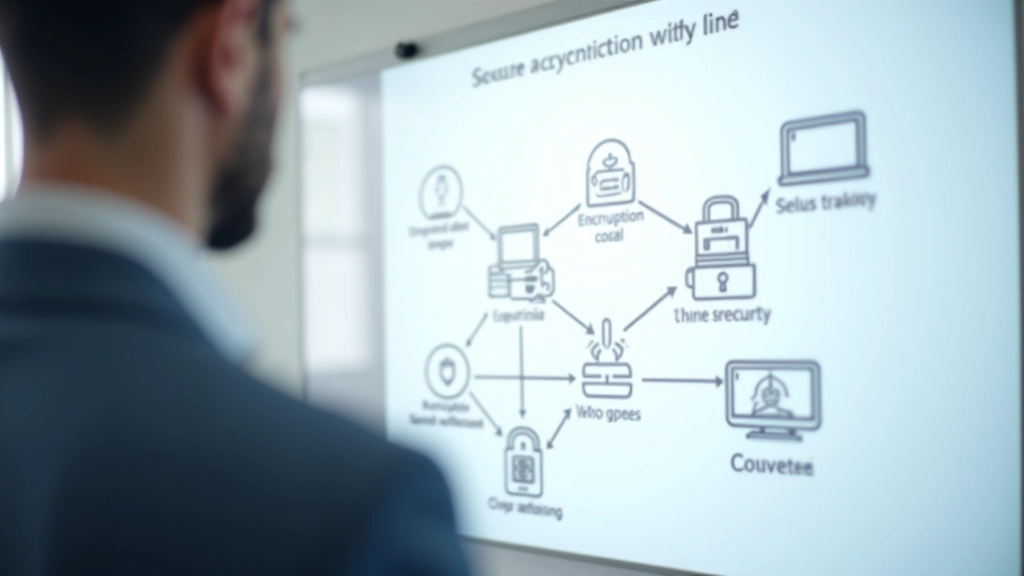
Practical Encryption Standards You Should Know
For personal use, you're primarily concerned with two encryption standards: AES-256 and ChaCha20. Here's why AES-256 matters — it's the U.S. government standard for protecting classified information. Not just regular documents, but actual national security secrets. If it's good enough for that level of classification, it's more than sufficient for protecting your personal browsing.
AES-256 uses a 256-bit key, meaning 2^256 possible key combinations. To put that in perspective, with current computing power, attempting to crack a single AES-256 encrypted message through brute force would take longer than the age of the universe. That's not exaggeration — it's mathematics. Your VPN provider would have to actually have a security breach to expose your data; mathematical cracking isn't feasible.
ChaCha20 is newer, developed by cryptographer Daniel Bernstein. It's particularly good for older devices or situations where you need speed without sacrificing security. It's used by Google, WhatsApp, and many modern applications. The reason it exists? Some devices struggle with AES hardware acceleration, so ChaCha20 offers comparable security with better performance on those systems.
"Most attacks on VPN users don't come from mathematically breaking encryption — they come from weak passwords, leaked credentials, or compromised devices. The encryption itself is almost always solid."
Making the Right Choice for Your Privacy
VPN encryption isn't magic, but it's remarkably effective at what it does: preventing casual interception of your data. When you're on public WiFi, your ISP can't see where you're going. Your neighbors on the same network can't sniff your passwords. You've created a private tunnel for your data, and that matters.
Here's what you actually need to check when evaluating a VPN: Does it use AES-256 or ChaCha20 encryption? What protocols does it support? Does the provider have a clear no-logs policy? Where are their servers located? These are the questions that matter. Don't get distracted by marketing claims about "military-grade encryption" — that phrase doesn't actually mean anything specific. It's just marketing language.
You don't need to understand every detail of cryptographic mathematics to use a VPN effectively. But understanding the basics — what AES-256 actually is, why key length matters, how protocols differ — that knowledge helps you cut through marketing noise and make decisions based on actual security principles rather than buzzwords.

Related Resources